What is bubble tea?
Bubble tea is the latest fad in foodie products, but it’s taken this tea-based product 25 years to make an impact in the UK since it was first developed in Taiwan in the 1980’s; but what is it?
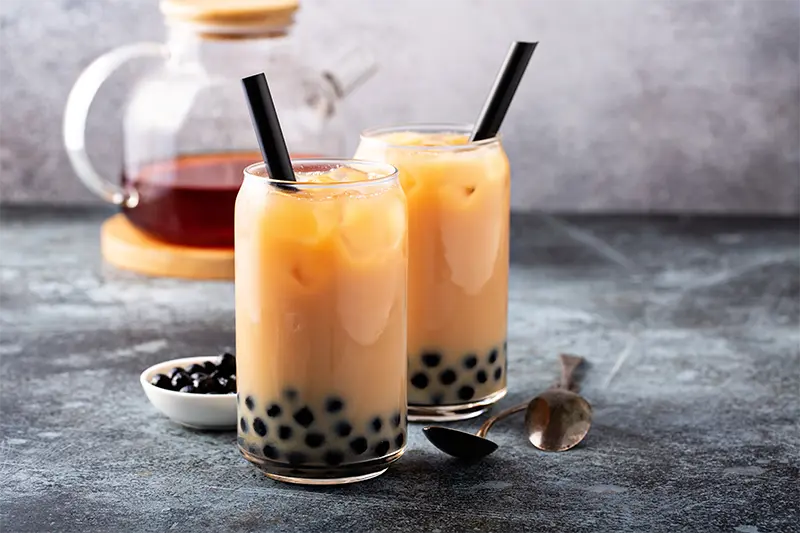
Well, it is a drink with a tea base, but you know that already. It is often sweetened and combined with milk and sometimes fruit flavourings and has become a hit with younger people. But what really makes bubble tea really unique, is the addition of chewy boba, the name given to small pearls of tapioca. These little gems completely change the texture of the whole beverage, making drinking boba tea a whole new experience.
BBC Good Food describe it as a “tea-based drink, most commonly consisting of tea accompanied by chewy tapioca balls, which can be made with or without milk, served hot or cold, and using black, green or oolong tea as the base.
What is the VAT position?
The VAT rules on food and drink are often weird and wonderful and can conjure up some interesting results. For example, recent tribunal cases have highlighted that whether marshmallows are zero rated or standard rated depends on their size and that flapjacks and brownies aren’t always cakes and don’t get me started on Jaffa cakes! So, will the next VAT battleground be bubble tea?
The starting point for food and drinks suitable for human consumption is that they are zero rated under Group 1, of the VAT Act of 1994. However, there are a number of excepted items that may be standard rated, including “other beverages (including fruit juices)”.
To further complicate matters, there are also some products which override the excepted items and fall back into zero rating. Of particular relevance to bubble tea is item 4 in Group 1: “Tea, maté, herbal teas and similar products, and preparations and extractions thereof and should be zero-rated”.
The law on VAT
If bubble tea is served as a hot drink, it is standard rated at 20%, as is ordinary tea. However, the VAT treatment of cold takeaway bubble tea is less clear. As a beverage, it will be an excepted item (and therefore standard rated) unless it falls within overriding item 4 as tea. The key question is therefore whether bubble tea can be classed as a drink similar to tea?
HMRC guidance and case law does not directly address this question. However, it is clear that just calling something a tea doesn’t necessarily make it one. Taken together, the guidance and case law identify the following areas to consider when deciding if something is really tea:
- Ingredients – are there additional flavourings that make it more akin to a soft drink than tea?
- Preparation – is it made from steeping or brewing leaves?
- Customer perception and marketing – is the drink viewed by the ordinary consumer as akin to tea and drunk as an alternative to it? Or does it compete with manufactured beverages in the soft drinks market?
So, is bubble tea really tea?
Well, it depends on the ingredients and preparation, some bubble tea may be considered more akin to a
soft drink than actual tea. Where that is the case, standard rating would apply. On the other hand, bubble tea made from brewed tea that has cooled and then had other ingredients added may qualify as zero rated. To further complicate matters, tapioca pudding is zero-rated, so perhaps bubble tea could be considered a sloppy tapioca-based dessert!
Marketing and consumer perception is subjective and could vary between different products. It could also be argued that bubble tea is akin to the various iced coffees (often containing flavourings and syrups) sold by coffee shops as alternatives to the more traditional latte or cappuccino and which are zero-rated. It is clearly impossible to make a blanket decision as to the VAT treatment of bubble tea, and I strongly suspect that each product may have to be considered on its own merits.
HMRC asked for clarification
Given the increasing popularity of bubble tea, the accounting bodies have approached HMRC to ask for further specific guidance as to when they may accept zero rating. This would not only assist businesses, but also save all parties concerned the time, effort and costs involved in possible future disputes. As and when HMRC issue guidance on the issue, I will let you know. In the meantime, those readers of this Blog who are bubble tea fans will have to wait a little longer for VAT clarity.
Accountant’s view
I have only tried bubble tea once, when given a sample at a promotion in Shrewsbury Market. The sample I was given was a passionfruit green tea with the mandatory boba balls. The tea was quite pleasant, but the addition of the boba balls, turned it into what amounted to a chewy, sloppy desert. I did not enjoy the experience, but then I am not in the under-30 demographic the drink is targeted at!